
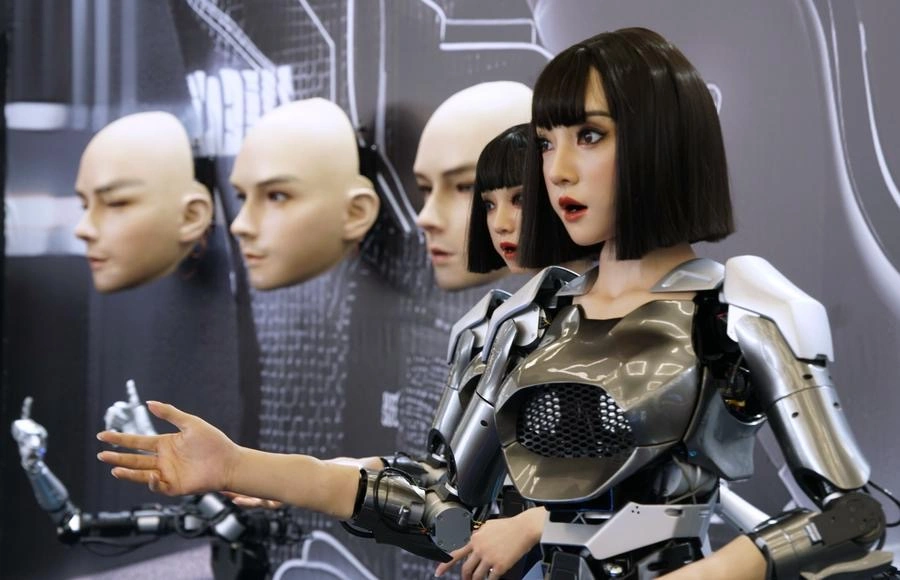
China is not playing around with humanoid robots. That statement is no longer a bold assumption—it is a reflection of the country’s aggressive push into advanced robotics, artificial intelligence, and intelligent manufacturing. Over the past few years, China has accelerated development in humanoid robotics, positioning itself as a dominant global force in next-generation automation.
From government-backed initiatives to private-sector innovation led by companies such as UBTECH Robotics and Xiaomi, China is building humanoid robots capable of walking, talking, lifting objects, and even performing industrial tasks. This movement is not experimental—it is strategic.
In this in-depth article, we explore why China is not playing around with humanoid robots, how the technology is evolving, the key players behind it, and what it means for the global AI race.
Why China Is Not Playing Around with Humanoid Robots
A National Strategy Backed by Policy
China’s push into humanoid robotics aligns with long-term national development plans such as State Council of the People’s Republic of China industrial modernization policies and the broader “Made in China 2025” framework. Robotics is considered a critical industry for economic transformation.
The Chinese government has identified humanoid robots as a frontier technology with the potential to:
- Offset labor shortages
- Boost high-end manufacturing
- Enhance defense capabilities
- Accelerate AI commercialization
- Improve healthcare and elderly care services
China is not playing around with humanoid robots because these machines represent more than innovation—they represent economic security and geopolitical leverage.
Massive Investment in AI and Robotics
China invests billions of dollars annually in AI and robotics research. Cities like Shenzhen, Beijing, and Shanghai are becoming robotics hubs, supported by:
- Government subsidies
- AI research grants
- Industrial robotics parks
- University-industry partnerships
Institutions such as Tsinghua University and Peking University are deeply involved in robotics research, collaborating with private firms to accelerate humanoid development.
This ecosystem proves that China is not playing around with humanoid robots—it is building an entire infrastructure around them.
The Rise of Chinese Humanoid Robot Companies
UBTECH Robotics: A Global Contender
UBTECH Robotics has become one of China’s most recognized humanoid robot developers. The company unveiled advanced humanoid models capable of:
- Autonomous walking
- Object recognition
- Voice interaction
- Industrial collaboration
UBTECH robots are being tested in factories and educational institutions. These robots are not just prototypes—they are entering real-world environments.
Xiaomi’s CyberOne: AI Meets Consumer Robotics
When Xiaomi introduced its humanoid robot CyberOne, it signaled that major tech companies are entering the race. Known primarily for smartphones and smart devices, Xiaomi’s expansion into robotics demonstrates how serious China is about humanoid technology.
CyberOne can:
- Recognize human emotions
- Detect gestures
- Navigate independently
This crossover between consumer electronics and robotics suggests a future where humanoid robots may enter homes, not just factories.
Fourier Intelligence and Advanced Mobility
Another emerging player is Fourier Intelligence, which focuses on medical and rehabilitation robotics. The company has developed humanoid platforms with advanced joint flexibility and balance systems.
Their robots showcase China’s ability to combine biomechanics with AI, making humanoid robots more stable and adaptable.
Industrial Applications: Where China Is Not Playing Around with Humanoid Robots
Smart Manufacturing Transformation
China is the world’s largest manufacturing hub. Humanoid robots are being designed to work alongside human workers in:
- Automotive assembly lines
- Electronics manufacturing
- Warehouse logistics
- Precision engineering
Instead of traditional robotic arms fixed in place, humanoid robots offer mobility and flexibility. This is critical for dynamic production environments.
By integrating humanoid robots into factories, China reduces reliance on manual labor while improving efficiency and consistency.
Logistics and Warehousing
E-commerce giants like Alibaba Group and JD.com are investing heavily in automation.
Humanoid robots can potentially:
- Sort packages
- Move inventory
- Load and unload shipments
- Perform repetitive tasks
With China’s massive e-commerce infrastructure, humanoid robotics could revolutionize fulfillment centers.
AI Integration: The Brain Behind the Machine
China is not playing around with humanoid robots because it combines robotics hardware with cutting-edge artificial intelligence.
Large Language Models and Robotics
Chinese AI firms are developing advanced large language models similar to global AI systems. Integrating conversational AI into humanoid robots enables:
- Natural language interaction
- Real-time decision-making
- Adaptive learning
AI-powered humanoid robots can analyze environments, recognize objects, and interact with humans naturally.
Computer Vision and Motion Control
Advanced computer vision allows robots to:
- Identify obstacles
- Detect human gestures
- Navigate complex environments
Motion control algorithms help maintain balance and coordination. This is particularly important for bipedal humanoid robots, which require dynamic stabilization.
Global Competition: China vs. the World
The U.S. and Tesla’s Optimus
While China is not playing around with humanoid robots, it faces strong competition. In the United States, Tesla is developing Optimus, a humanoid robot intended for industrial and domestic use.
The global robotics race is intensifying, with companies racing to achieve:
- Lower production costs
- Greater autonomy
- Commercial scalability
China’s advantage lies in its manufacturing ecosystem and government coordination.
Japan and Robotics Legacy
Japan has long been known for robotics innovation, with companies like Honda previously developing humanoid robots such as ASIMO.
However, China’s rapid scaling ability and aggressive funding are shifting the balance of power.
Military and Strategic Implications
Although most humanoid robot projects focus on civilian use, the strategic implications cannot be ignored.
China is not playing around with humanoid robots because dual-use technology can be applied to:
- Disaster response
- Hazardous environment operations
- Surveillance
- Defense logistics
Humanoid robots capable of navigating human environments could serve in complex missions without risking human lives.
Challenges Facing China’s Humanoid Robot Ambitions
Despite rapid progress, several challenges remain:
High Production Costs
Humanoid robots are expensive to build. Advanced sensors, actuators, AI chips, and battery systems increase costs significantly.
Battery Limitations
Energy efficiency remains a major obstacle. Humanoid robots require significant power for movement and computation.
Ethical and Social Concerns
As humanoid robots become more advanced, ethical questions arise:
- Job displacement
- Data privacy
- Human-robot interaction risks
China must balance innovation with regulation.
The Future: What Comes Next?
Mass Production Within the Next Decade
Industry experts predict that humanoid robots could enter mass production within the next 5–10 years. China’s large-scale manufacturing advantage may lower prices faster than competitors.
Integration into Daily Life
Future humanoid robots may assist with:
- Elderly care
- Household chores
- Personal assistance
- Education
With an aging population, China sees humanoid robots as a long-term solution to demographic challenges.
Conclusion: China Is Not Playing Around with Humanoid Robots
China is not playing around with humanoid robots—it is building a future where intelligent machines become part of everyday life and industrial operations. Backed by government policy, massive investment, AI breakthroughs, and manufacturing dominance, China’s humanoid robotics industry is accelerating at an unprecedented pace.
As companies like UBTECH Robotics, Xiaomi, and Fourier Intelligence continue pushing boundaries, the world is witnessing the emergence of a new technological superpower in robotics.
The message is clear: China is not playing around with humanoid robots. It is engineering the next era of automation—and the global competition has only just begun.